What YFC is Doing

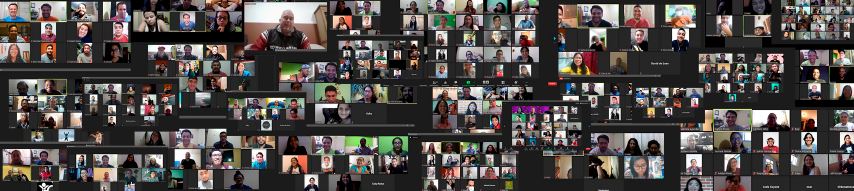
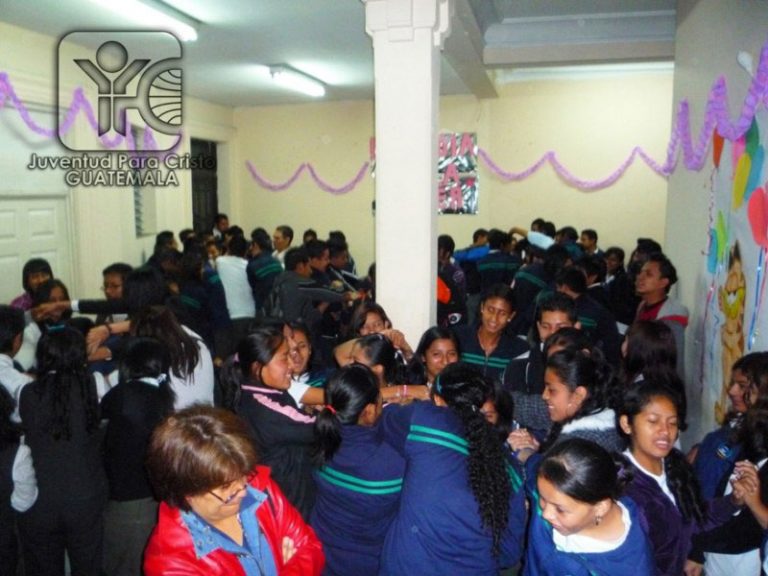
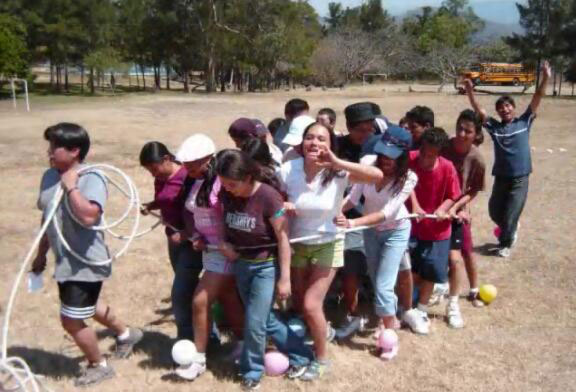
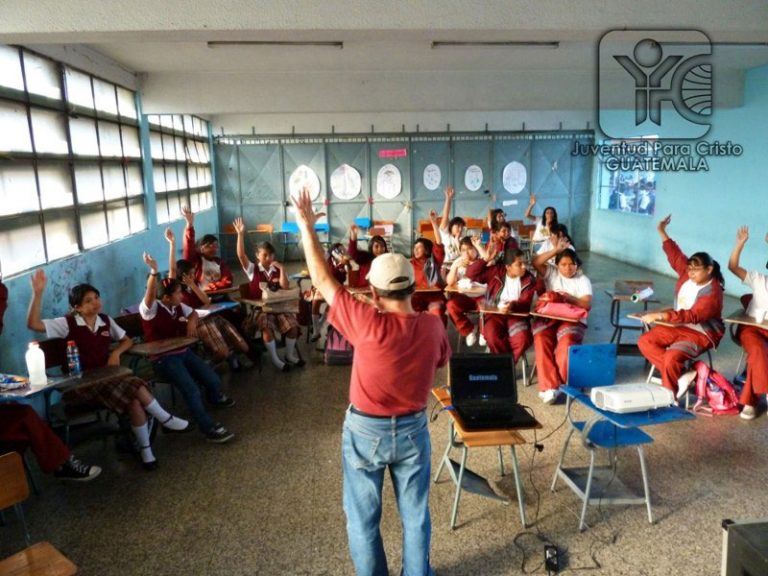
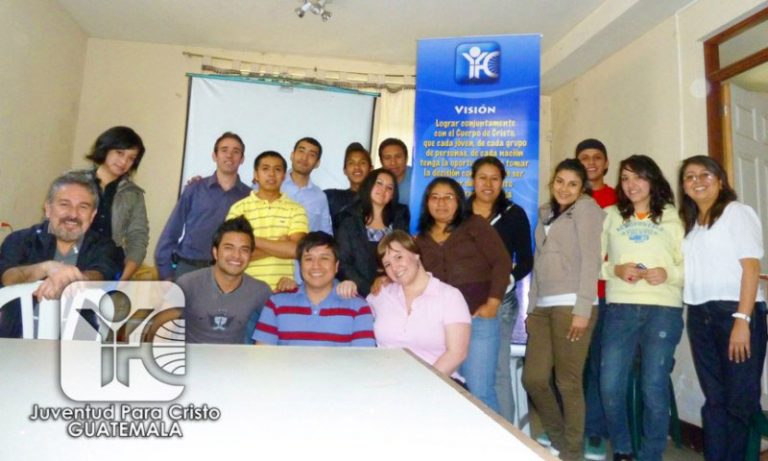
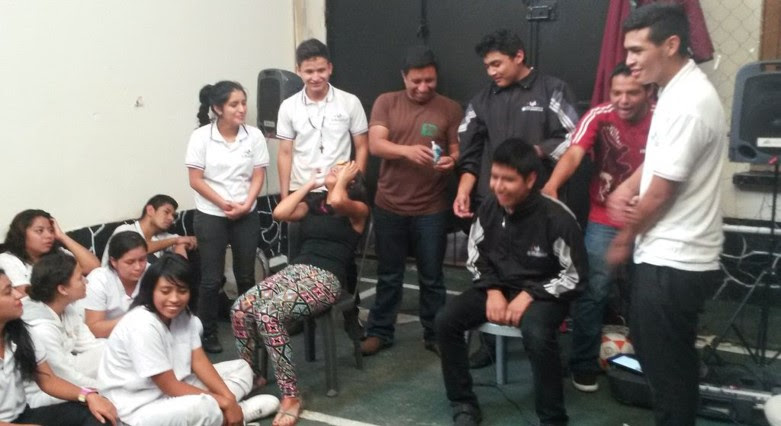
Youth for Christ Guatemala, with a full-time staff of four people and a team of trained volunteers, is developing the Generation 21 (G21) project, focusing on the following components:

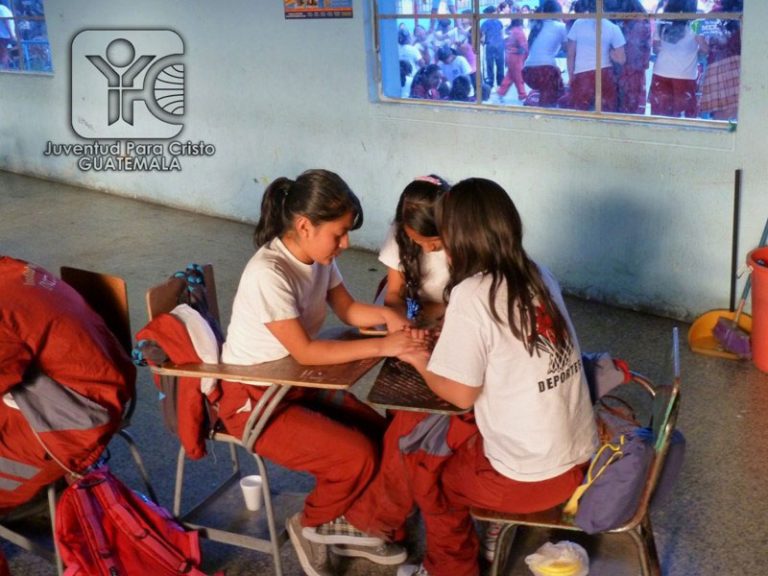
  1. The G21 Club, with middle school students; in private and public educational centers
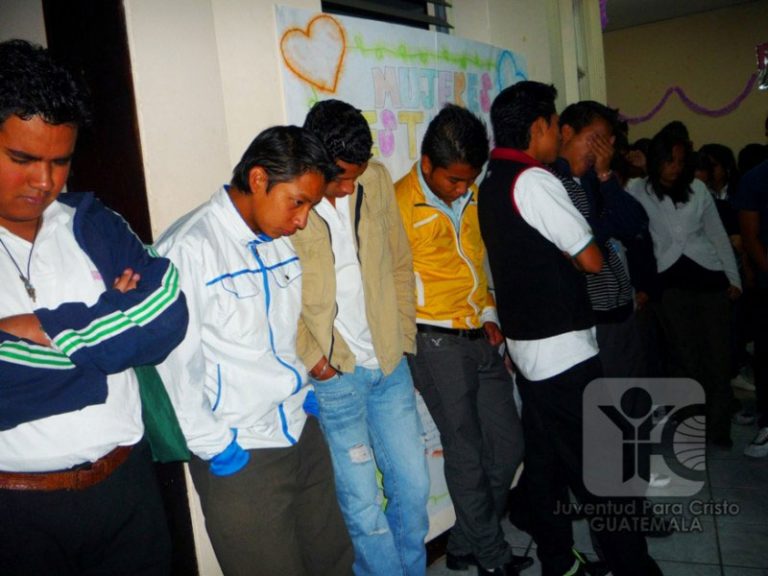
  2. The “I abstain Myself” Campaign: a sexual orientation campaign, that promotes abstinence, to fight back the advance of HIV and AIDS in the youth sector
  3. The “Youth Prayer Movement”: a movement to mobilize Guatemala’s Christian youth to pray for other young people. Organizing Christian youth in their churches in Prayer Triplets, Prayer Walks, Prayer Concerts and the National Day of Prayer for Youth (this year it will take place on Sunday August 7th, 2011)
  4. Intensive Leadership Formation School (ILFS): Through the year we develop three ILF’s; three strategic moments in which we call out to leaders and develop workshops, dedicated to church leaders that work with youth. We also use these moments to recruit volunteers.
  5. The Gospel Tour with Carpenter’s Tools: 20 days of intensive Gospel sharing in schools, public places and churches; with the goal of touching ten thousand youth with the Gospel, between the months of July and August

Prayer Needs

  • Economical provision to adequately cover the salaries of our staff and the operating expenses
  • For material in Spanish to train YFC staff and other leaders
  • For the effectiveness of our programs
  • For the Lord to permit us to work with a larger number of volunteers
  • For the security of our staff and their families, as well as the young people who are involved in our programs
  • For the Lord to provide us with an adequate property for our offices and youth center

About Guatemala

Guatemala

Introduction

The Mayan civilization flourished in Guatemala and surrounding regions during the first millennium A.D. After almost three centuries as a Spanish colony, Guatemala won its independence in 1821. During the second half of the 20th century, it experienced a variety of military and civilian governments, as well as a 36-year guerrilla war. In 1996, the government signed a peace agreement formally ending the conflict, which had left more than 100,000 people dead and had created, by some estimates, some 1 million refugees.

Geography

Location

Location: Central America, bordering the North Pacific Ocean, between El Salvador and Mexico, and bordering the Gulf of Honduras (Caribbean Sea) between Honduras and Belize
Geographic Coordinates: 15 30 N, 90 15 W

Area

Total Area: 108,889 sq km Rank: 106
Land Area: 107,159 sq km
Water Area: 1,730 sq km
Comparison: slightly smaller than Tennessee
Land Boundaries: 1,687 km
Bordering Countries: Belize 266 km, El Salvador 203 km, Honduras 256 km, Mexico 962 km
Coastline: 400 km

Climate

tropical; hot, humid in lowlands; cooler in highlands

Terrain

mostly mountains with narrow coastal plains and rolling limestone plateau

Elevations

Lowest Point: Pacific Ocean 0 m
Highest Point: Volcan Tajumulco 4,211 m

Natural Resources

petroleum, nickel, rare woods, fish, chicle, hydropower

Land Use

Arable land: 13.22%
Permanent Crops: 5.6%
Other: 81.18% (2005)
Irrigated Land: 1,300 sq km (2003)
Renewable Water Resources: 111.3 cu km (2000)
Total Freshwater withdrawal (domestic/industrial/agricultural): 2.01 cu km/yr (6%/13%/80%)
Freshwater Withdrawal Per Capita: 160 cu m/yr (2000)

Environment

Natural Hazards: numerous volcanoes in mountains, with occasional violent earthquakes; Caribbean coast extremely susceptible to hurricanes and other tropical storms
Environmental Issues: deforestation in the Peten rainforest; soil erosion; water pollution
Environmental Agreements: Party to: Antarctic Treaty, Biodiversity, Climate Change, Climate Change-Kyoto Protocol, Desertification, Endangered Species, Environmental Modification, Hazardous Wastes, Law of the Sea, Marine Dumping, Ozone Layer Protection, Ship Pollution, Wetlands, Whaling

Geography Notes

no natural harbors on west coast

People

Population: 13,276,517 (July 2010 est.) Rank: 69

Age Structure

0-14 years: 39.4% (male 2,664,058/female 2,573,006)
15-64 years: 56.8% (male 3,655,184/female 3,884,331)
65 years and over: 3.8% (male 231,652/female 268,286) (2010 est.)
Median Age: 19.1 years

Population Growth

Growth Rate: 2.066% (2010 est.) Rank: 54
Birth Rate: 27.98 births/1,000 population (2010 est.) Rank: 55
Death Rate: 5.11 deaths/1,000 population (July 2010 est.) Rank: 183
Net Migration Rate: -2.21 migrant(s)/1,000 population (2010 est.) Rank: 134

Urbanization

Urban Population: 49% of total population (2008)
Rate of Urbanization: 3.4% annual rate of change (2005-10 est.)

Life and Death

Infant Mortality Rate: 27.84 deaths/1,000 live births Rank: 79
Life Expectancy at Birth: 70.29 years Rank: 143
Fertility Rate: 3.36 children born/woman (2010 est.) Rank: 56

Health and Disease

HIV/AIDS - Adult Prevalence Rate: 0.8% (2007 est.) Rank: 60
People living with HIV/AIDS: 59,000 (2007 est.) Rank: 61
HIV/AIDS Deaths: 3,900 (2007 est.) Rank: 51
Degree of Risk for Major Infectious Diseases: high
Food or waterborne diseases: bacterial diarrhea, hepatitis A, and typhoid fever
Vectorborne disease: dengue fever and malaria
Water Contact Diseases: leptospirosis (2009)

Nationality and Culture

Noun: Guatemalan(s)
Adjective: Guatemalan
Ethnic Groups: Mestizo (mixed Amerindian-Spanish - in local Spanish called Ladino) and European 59.4%, K'iche 9.1%, Kaqchikel 8.4%, Mam 7.9%, Q'eqchi 6.3%, other Mayan 8.6%, indigenous non-Mayan 0.2%, other 0.1% (2001 census)
Religion: Roman Catholic, Protestant, indigenous Mayan beliefs
Languages: Spanish 60%, Amerindian languages 40% (23 officially recognized Amerindian languages, including Quiche, Cakchiquel, Kekchi, Mam, Garifuna, and Xinca)

Education

Literacy (Meaning, age 15 and over can read and write): 69.1% Male: 75.4% Female: 63.3% (2002 census)
School life expectancy (primary to tertiary education): 10 years Male: 11 years Female: 10 years (2006)
Education expenditures: 2.6% of GDP (2006) Rank: 154

Government

Country Name

Conventional Long Form: Republic of Guatemala
Conventional Short Form: Guatemala
Local Long Form: Republica de Guatemala
Local Short Form: Guatemala
Government Type: constitutional democratic republic
Capital: Guatemala City Geographic Coordinates: 14 37 N, 90 31 W

Administrative divisions

22 departments (departamentos, singular - departamento); Alta Verapaz, Baja Verapaz, Chimaltenango, Chiquimula, El Progreso, Escuintla, Guatemala, Huehuetenango, Izabal, Jalapa, Jutiapa, Peten, Quetzaltenango, Quiche, Retalhuleu, Sacatepequez, San Marcos, Santa Rosa, Solola, Suchitepequez, Totonicapan, Zacapa
Independence: 15 September 1821 (from Spain)
National holiday: Independence Day, 15 September (1821)
Constitution: 31 May 1985, effective 14 January 1986; suspended 25 May 1993; reinstated 5 June 1993; amended November 1993
Legal system: civil law system; judicial review of legislative acts; has not accepted compulsory ICJ jurisdiction
Suffrage: 18 years of age; universal; note - active duty members of the armed forces may not vote and are restricted to their barracks on election day

Executive Branch

Chief of State: President Alvaro COLOM Caballeros (since 14 January 2008); Vice President Jose Rafael ESPADA (since 14 January 2008); note - the president is both the chief of state and head of government
Head of Government: President Alvaro COLOM Caballeros (since 14 January 2008); Vice President Jose Rafael ESPADA (since 14 January 2008)
Cabinet: Council of Ministers appointed by the president
elections: president elected by popular vote for a four-year term (may not serve consecutive terms); election last held on 9 September 2007; runoff held on 4 November 2007 (next to be held in September 2011)
Election Results: Alvaro COLOM Caballeros elected president; percent of vote - Alvaro COLOM Caballeros 52.8%, Otto PEREZ Molina 47.2%

Legislative Branch

unicameral Congress of the Republic or Congreso de la Republica (158 seats; members elected by popular vote to serve four-year terms)
Elections: last held on 9 September 2007 (next to be held in September 2011)
Election Results: percent of vote by party - UNE 30.4%, GANA 23.4%, PP 18.9%, FRG 9.5%, PU 5.1%, other 12.7%; seats by party - UNE 48, GANA 37, PP 30, FRG 15, PU 8, CASA 5, EG 4, PAN 4, UCN 4, URNG 2, UD 1

Judicial branch

Constitutional Court or Corte de Constitucionalidad is Guatemala's highest court (five judges are elected by Congress for concurrent five-year terms); Supreme Court of Justice or Corte Suprema de Justicia (13 members are elected by Congress to serve concurrent five-year terms and elect a president of the Court each year from among their number; the president of the Supreme Court of Justice also supervises trial judges around the country, who are named to five-year terms)

Politics

Political Parties and Leaders: Center of Social Action or CASA [Feliz Adolfo RUANO de Leon]; Democracy Front or FRENTE [Alfonso CABRERA]; Democratic Union or UD [Edwin Armando MARTINEZ Herrera]; Encounter for Guatemala or EG [Nineth MONTENGRO]; Grand National Alliance or GANA [Jaime Antonio MARTINEZ Lohayza]; Guatemalan National Revolutionary Unity or URNG [Hector Alfredo NUILA Ericastilla]; Guatemalan Republican Front or FRG [Efrain RIOS Montt]; Independent Bloc Guatemala or BG [Macario Efrain OLIVA Muralles]; Independent Democratic Freedom Renewed or LIDER [Roberto Ricardo VILLATE Villatoro]; National Advancement Party or PAN [Carlos YAT Sierra]; National Unity for Hope or UNE [Roberto KESTLER Velasquez]; Nationalist Change Union or UCN [Cesar Leonel SOTO Arango]; Patriot Party or PP [Ingrid Roxana BALDETTI Elias]; Unionista Party or PU [Pablo Manuel DURATE Saenz de Tejada]
Political Pressure Groups and Leaders: Agrarian Owners Group or UNAGRO; Alliance Against Impunity or AAI; Committee for Campesino Unity or CUC; Coordinating Committee of Agricultural, Commercial, Industrial, and Financial Associations or CACIF; International Commission Against Impunity in Guatemala or CICIG; Mutual Support Group or GAM
International Organization Participation: BCIE, CACM, FAO, G-24, G-77, IADB, IAEA, IBRD, ICAO, ICC, ICRM, IDA, IFAD, IFC, IFRCS, IHO, ILO, IMF, IMO, Interpol, IOC, IOM, IPU, ISO (correspondent), ITSO, ITU, ITUC, LAES, LAIA (observer), MIGA, MINUSTAH, MONUC, NAM, OAS, OPANAL, OPCW, PCA, PetroCaribe, RG, SICA, UN, UNAMID, UNCTAD, UNESCO, UNIDO, UNIFIL, Union Latina, UNMIS, UNOCI, UNWTO, UPU, WCO, WFTU, WHO, WIPO, WMO, WTO
Flag Description: three equal vertical bands of light blue (hoist side), white, and light blue, with the coat of arms centered in the white band; the coat of arms includes a green and red quetzal (the national bird) representing liberty and a scroll bearing the inscription LIBERTAD 15 DE SEPTIEMBRE DE 1821 (the original date of independence from Spain) all superimposed on a pair of crossed rifles signifying Guatemala's willingness to defend itself and a pair of crossed swords representing honor and framed by a laurel wreath symbolizing victory; the blue bands stand for the Pacific Ocean and the Caribbean Sea and the sea and sky; the white band denotes peace and purity

Economy

Economy Overview: Guatemala is the most populous of the Central American countries with a GDP per capita roughly one-half that of the average for Latin America and the Caribbean. The agricultural sector accounts for nearly 15% of GDP and half of the labor force; key agricultural exports include coffee, sugar, and bananas. The 1996 peace accords, which ended 36 years of civil war, removed a major obstacle to foreign investment, and since then Guatemala has pursued important reforms and macroeconomic stabilization. The Central American Free Trade Agreement (CAFTA) entered into force in July 2006 spurring increased investment and diversification of exports, with the largest increases in ethanol and non-traditional agricultural exports. While CAFTA has helped improve the investment climate, concerns over security, the lack of skilled workers and poor infrastructure continue to hamper foreign direct investment. The distribution of income remains highly unequal with the richest decile comprising over 40% of Guatemala's overall consumption. More than half of the population is below the national poverty line and 15% lives in extreme poverty. Poverty among indigenous groups, which make up 38% of the population, averages 76% and extreme poverty rises to 28%. 43% of children under five are chronically malnourished, one of the highest malnutrition rates in the world. President COLOM entered into office with the promise to increase education, healthcare, and rural development, and in April 2008 he inaugurated a conditional cash transfer program, modeled after programs in Brazil and Mexico, that provide financial incentives for poor families to keep their children in school and get regular health check-ups. Given Guatemala's large expatriate community in the United States, it is the top remittance recipient in Central America, with inflows serving as a primary source of foreign income equivalent to nearly two-thirds of exports. The economy contracted in 2009 as export demand from US and other Central American markets fell and foreign investment slowed amid the global recession. The economy will likely recover gradually in 2010 and return to more normal growth rates by 2012.

Gross Domestic Product

GDP (purchasing power parity): $67.87 billion (2009 est.) Rank: 81
GDP - real growth rate: 0.6% (2009 est.) Rank: 104
GDP - per capita (PPP): $5,100 (2009 est.) Rank: 142
GDP - Composition by Sector: Agriculture: 13.5% Industry: 24.4% Services: 62% (2009 est.)

Labor Force

Labor Force: 4.157 million (2009 est.) Rank: 85
Labor force - by occupation: Agriculture: 50% Industry: 15% Services: 35% (1999 est.)
Unemployment Rate: 3.2% (2005 est.) Rank: 25

Poverty

Population below poverty line: 56.2% (2004 est.)

Transnational Issues

International Disputes: annual ministerial meetings under the OAS-initiated Agreement on the Framework for Negotiations and Confidence Building Measures continue to address Guatemalan land and maritime claims in Belize and the Caribbean Sea; the Line of Adjacency created under the 2002 Differendum serves in lieu of the contiguous international boundary to control squatting in the sparsely inhabited rain forests of Belize's border region; Mexico must deal with thousands of impoverished Guatemalans and other Central Americans who cross the porous border looking for work in Mexico and the United States

Want to know more? Show Full Profile